
Emergency Tree Removal Victoria
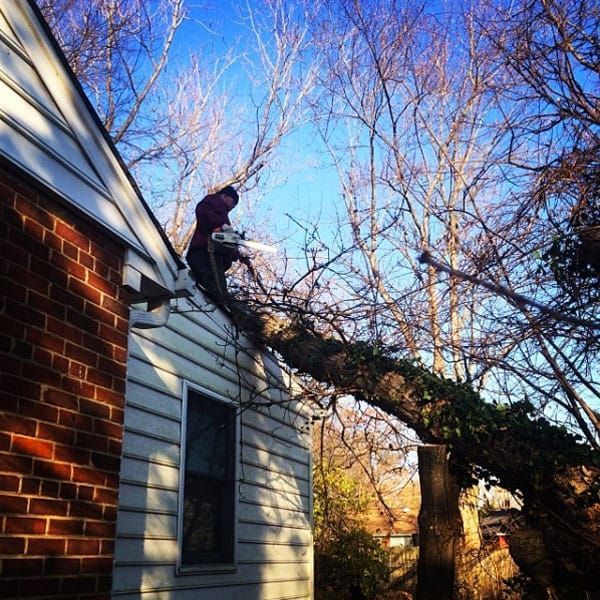
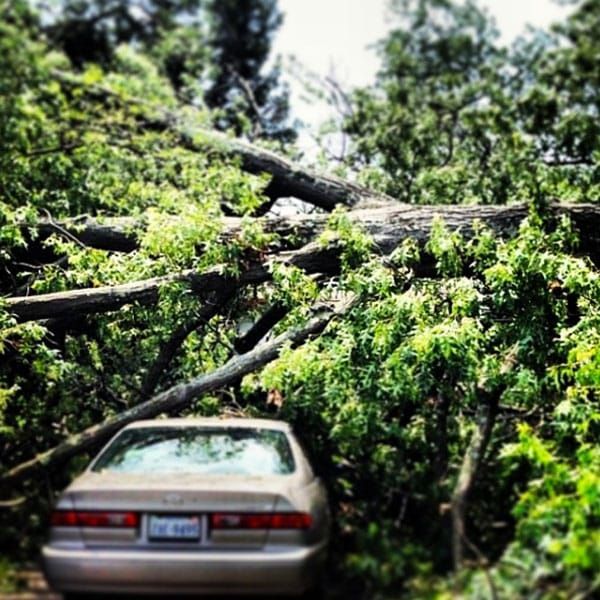
Every year, a significant number of trees fall on houses, automobiles, buildings, structures, power lines, and more. At Victoria Tree Masters, we’re highly specialized for this very type of emergency tree removal service. Every year, we receive many urgent calls from homeowners throughout Victoria asking us to remove trees that fall during these dangerous conditions.
If you need help with any of the following, just give us a call.
We can generally respond to your emergency within an hour or two.
- Large and hazardous tree take downs
- Storm damage clean-up
- Assessment and removal of trees with property damage
- Evaluation and handling of dangerous trees
In emergency situations, and especially after a storm, the surrounding area where trees have fallen is extremely unsafe. Trees and branches may be under extreme pressure - if they break, they can cause severe injury or death. Other trees or limbs may be hanging and ready to fall.
If you feel a tree is about to fall on your home vacate the premises ASAP. Give us a call and our staff will safely maneuver around the tree and solve this problem in the safest and most efficient way possible.
If a tree has fallen on your home, vacate the premises and call us immediately! Fallen trees can result in dangerous electrical sparks or gas leaks and cause extensive damage inside the home.
Get Instant Quote
Contact Us
Victoria Tree Masters Emergency Tree Removals
Trees often bring down power lines, causing dangerous conditions for homeowners and tree care workers to perform emergency tree work, the appropriate skills are critical. Tree care, especially during emergency situations, is the 2nd most dangerous industry in the world. Lives are lost, and major injuries occur every day in the tree service business. That’s why hiring a licensed, bonded, and insured professional tree service is an absolute necessity. Victoria Tree Masters has the skills and manpower to complete these emergency tree removals in a safe, timely, and efficient manner. When large storms sweep through and cause major tree damage by way of wind, rain, ice, or snow. During these times, you will need a Tree Service company to handle these emergency jobs.
Storm Damage Prevention
While there may be nothing you can do to completely avoid tree damage from heavy snow and ice, hurricanes or flooding, it IS possible to minimize the risk. Careful inspection can reveal defects in your trees that make them more prone to breakage, falling over, or splitting unexpectedly. The best way to minimize the risk of storm damage caused by trees, and protect yourself and your property, is to perform a regular tree inspection. Take some time to examine your trees (from the ground – don’t try to climb them!). See if you spot any of the following issues, all of which increase the risk of damage from storms.
Potential Risk Factors
Dead or damaged branches and/or trees.
Look for deadwood, cracks or splits, hanging branches or any other sort of damage. These are more likely to snap when under pressure from high winds.
Diseased or decayed wood.
Trees and branches that aren’t healthy are generally weaker and more vulnerable to breakage.
Structural problems.
While a tree care professional is best able to identify structural problems that compromise the stability of a tree, there are some things you can see yourself. Look for V-shaped crotches, crossing branches that are rubbing against each other, and top-heavy trees (where the canopy has been excessively “lifted” to provide more clearance underneath).
Severely leaning trees.
Just because a tree is leaning doesn’t mean that it will fall over. But the more it leans, the greater the risk of failure, especially when rains have saturated the ground.
Poor root structure.
A tree that’s not firmly anchored is more susceptible to failure during a storm. Things to look out for include girdling roots, cut or damaged roots (such as from nearby construction) and newly planted trees with little root growth.
Topped trees.
We do not top trees because new growth is poorly attached and susceptible to breakage (among other problems). If a tree has previously been topped, it should be inspected for potential safety issues.
Lion-tailed trees.
This is another pruning method we don’t employ because of health and safety implications for the tree. During a storm, the heavy foliage growth at the end of long, bare branch gets whipped around, breaking the branches.
Overly dense canopy.
A tree with a thick canopy of leaves acts as a sail, rather than letting the wind pass through.
Improperly pruned trees.
Some trees are mistakenly “thinned” by removing a lot of branches from the interior of the tree, while leaving plenty of foliage around the outside. Unfortunately, this misguided technique makes storm damage more likely.
If you notice anything that concerns you, give us a call. Our tree care professionals are trained to look for potential hazards posed by your trees. We’ll be able to address these risks and take proper action – such as remove dead trees, pruning, cabling or using fertilization to improve the health of your trees – before any major storms come through.
What to Expect
During business hours, there's always someone to answer the phone. However, extreme weather can causes extensive tree damage throughout the area, and leave us swamped with phone calls so we may ask you to leave a message. Our arborists will assess the situation with your tree or trees and determine the best way to fix the problem. They'll provide a detailed quote for the work.
Depending on the situation, trucks and heavy equipment may need to access your property. If there are other trees down in the area and blocking roads, there may be a delay in reaching your property. We take great care to have as little impact on the surrounding area as possible while safely addressing your tree emergency. Experienced safety professionals will be on site to ensure staff follow the highest safety standards.
Safety Advice
When trees or branches are damaged or have fallen, it places enormous stress on the rest of the tree. When the tree or branch is moved or cut, the remaining wood can react violently and unexpectedly to the change in forces acting on it. Fallen trees can roll (crushing anyone standing nearby), branches can spring back or sideways (hitting anything nearby), and additional pieces can drop (hitting whatever is below).
Dealing with damaged trees is not a DIY job.
It requires specialized equipment, including safety equipment, and extensive skills and training to do it efficiently, properly and safely. Many homeowners have been killed trying to remove a storm-damaged tree. Please don't let that happen to you. Leave it to the tree service pros!
My tree’s trunk has split apart. Can it be saved?
Depending on how significant the split is, the arborists at Independent Tree may be able to help trees with split trunks by the use of cabling. During this process, they attach strong cables between the limbs to limit movement, stabilize the tree, and prevent the split sections from separating entirely.
While many trees have a single trunk, others may develop two or more trunks, with those trunks branching off, forming a V. If the angle is less than 45 degrees, the structure of the tree is considered weak, and cabling may be necessary to prevent it from splitting.
Our tree has a long, heavy branch that is growing over a pedestrian area. How can we prevent possible future injury to passersby?
While you may think that removing the large branch is the only option, this may be a situation where cabling or bracing may help. These methods can prevent a large branch or even an entire tree limb from falling.
Contact us to schedule a consultation to see if tree cabling or bracing would help your tree.
Why is stump removal necessary?
Stumps in your yard are unattractive, reduce your home’s curb appeal, and sometimes occupy parts of your landscape you could otherwise use and enjoy. Worse still, stumps are dangerous because they – and their root systems — are a tripping hazard, particularly at night.
When a tree has been cut down, and a stump remains, that stump becomes a welcoming haven for invasive organisms that infiltrate the stump and lead to its further decay. Stumps host pests, snakes, and vermin. Once these species invade and multiply, they can prove quite expensive to remove. Timely stump grinding prevents these pests from inhabiting your yard.
Does cabling hurt a tree?
Not if done correctly. If cabling is done incorrectly, however, it can damage or even kill a tree. This is why it is important to hire tree care professionals, such as those at Independent Tree, to cable your trees.
Cabling can lead to girdling if done incorrectly, where a tree’s growth is impeded by the cables. Improperly anchored cables can come loose (sometimes damaging nearby structures) or break the branch to which they were attached. Knowing where to correctly place cables while preventing girdling over time is one of the benefits of hiring a professional for this task.
Can I add cabling to my tree myself?
We don’t recommend it. Even for smaller trees, the area that usually needs to be cabled is often far up in the canopy of a tree, meaning that at least a ladder is necessary to reach the area. Once you do any work on a tree that is not done from ground level, the chances of injury increase.
Skill and experience are needed to know how and where to properly add cabling and/or bracing to a tree. It also requires specialized equipment and cables that aren’t available in local hardware stores. Many DIY attempts lead to more structural damage, injury, or eventual girdling of the tree.
How long does cabling last?
If done correctly, cabling can last many years, sometimes 20 to 40 years. However, any cabling in a tree should be inspected frequently by an arborist. If a tree is still growing, the tree cabling may need to be redone and replaced every few years.
Are cables and bracing rods a guarantee that my tree won’t fail?
No tree, no matter how well-maintained or supported, is guaranteed not to fail. Cabling and bracing can help extend the life of a tree, sometimes by many decades, but it does not guarantee an everlasting tree.
Given the right circumstances, any tree can succumb to nature. However, cabling and bracing can usually prevent or forestall some of the worst-case scenarios and mitigate safety risks posed by an unstable tree structure.
The decomposing stump can also change the soil’s pH. This may cause long-term soil benefits down the road but may also negatively affect your plants in the short-term. It is always wise to test your soil before planting anything, but especially if you are planting over a ground stump.
My tree was cabled, so why don’t I see any wires?
In most cases, you won't notice the cabling at all. In fact, cabling may be very difficult to see in your trees, especially if you don't know what you are looking for.
While cabling is extremely strong and does a great job, it is meant to be inconspicuous so it doesn't take away from the natural beauty of your trees.
We purposefully install the cables to blend in with the tree’s canopy while also ensuring that they are placed in the best spot to support the structure of the tree.
Whether you can spot the cables or not, rest assured that if Independent Tree installed the cabling, the strong wires are there and are doing their job!